
HELP STARTS
WITH A CONVERSATION


Every Visit Is an Opportunity to Help
11%
of Georgia middle and high school students have seriously thought about suicide.
6%
have made an attempt during the previous year.
17%
of Georgia middle and high school students report considering self-harm.
Youth mental health needs remain significant, with nearly 1 in 5 children experiencing a mental, emotional, or behavioral disorder, yet only a small percentage receive specialized care. Suicide continues to be a leading cause of death among people aged 10–34. Pediatricians and Pediatric Providers are often the first point of contact for families in distress and play a critical role in connecting them to immediate support. Many individuals who reach out to 988 report feeling less depressed, less suicidal, and more hopeful after speaking with a counselor.
As a Pediatric Health Care Provider, you are often the first point of contact for children and families facing emotional and behavioral health challenges. Your role in identifying early signs of distress and connecting young people with the right resources is invaluable.
Georgia's 988 lifeline is performing at a high level, with calls now answered in well under 30 seconds as of late 2025 to early 2026, following a temporary slowdown during a system transition earlier in 2025. Fewer than 2% of calls result in active rescue, meaning most situations are successfully de-escalated without emergency intervention. The service is available 24/7 via call, text, or chat, is free and confidential, and offers support in English, Spanish, ASL, and more than 240 additional languages. Public data on performance, including call volume and answer rates, is regularly updated online at 988ga.org/data.
Pediatric Providers are encouraged to integrate 988 into routine care by sharing information through patient materials, recommending it during moments of emotional distress, and using clear, reassuring language to normalize its use.
Displaying educational resources in clinical settings and incorporating 988 into conversations with patients and caregivers can help expand access to timely mental health support.
Order Free Suicide Prevention Materials Here
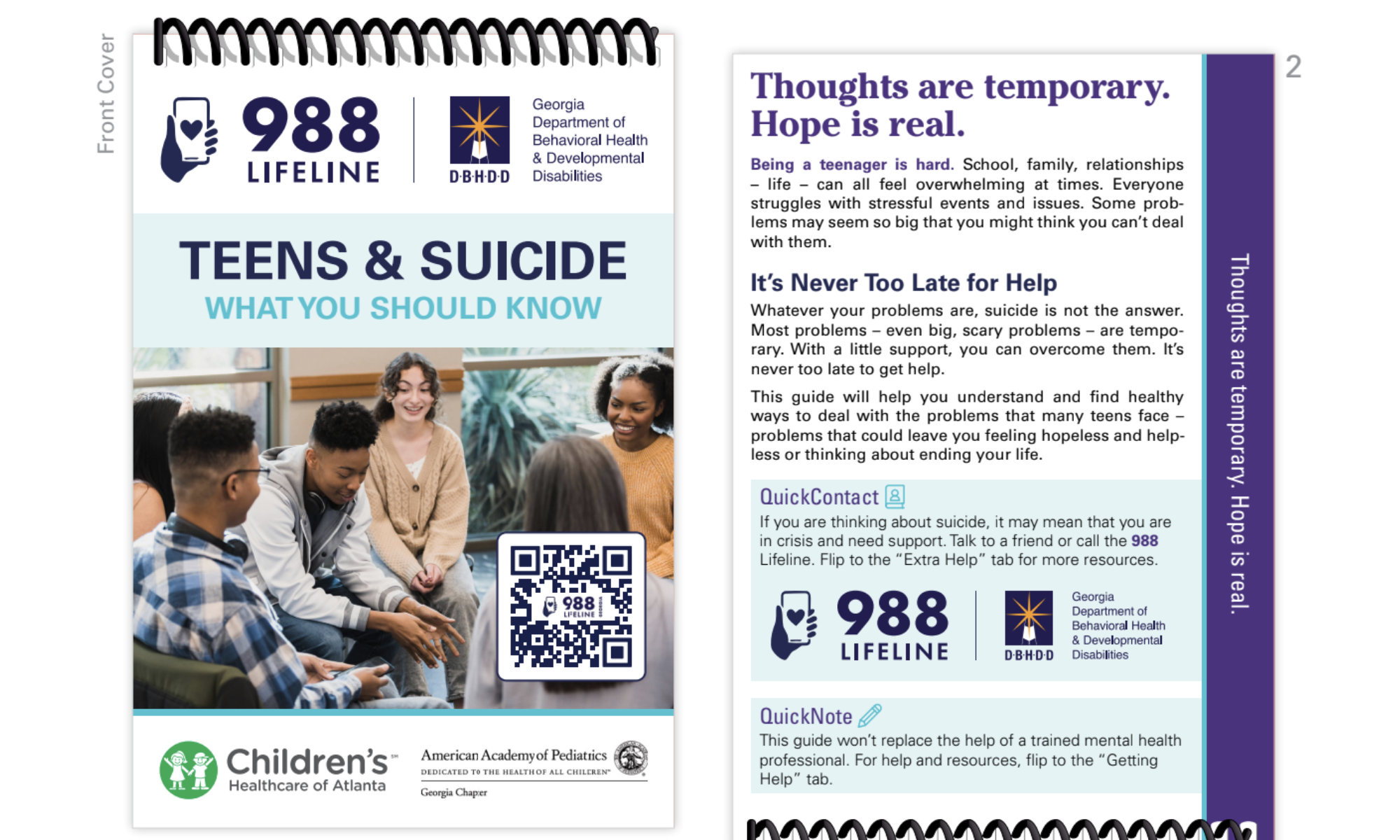
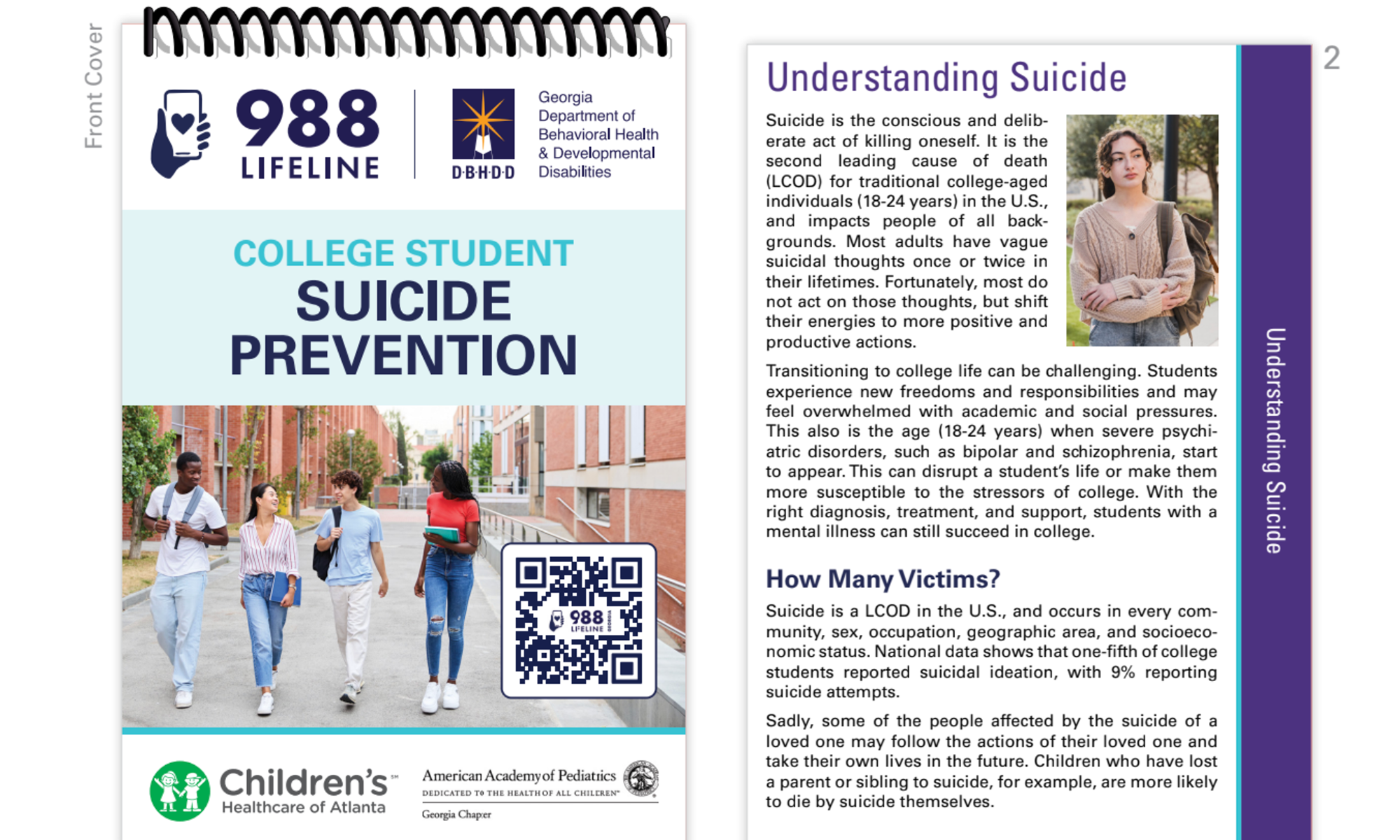
You can order free flipbooks for your practice, courtesy of Georgia's Department of Behavioral Health and Developmental Disabilities and developed in partnership with the Georgia Chapter of the American Academy of Pediatrics and Children's Healthcare of Atlanta.
Materials ship to your practice within 10 days.
About the materials:
These 3.75 × 5.5 guides are compact enough to fit in a pocket or backpack, making them easily accessible for teens and college students when they're feeling overwhelmed or hopeless.
Teen guide — For teens struggling with suicidal thoughts, this guide provides a relatable checklist of common teen challenges, along with practical advice for handling difficult situations and finding help for them or a friend.
College guide — For college students, this guide explores the challenges and opportunities that come with college life, where new responsibilities and freedoms can sometimes feel overwhelming and lead to depression, anxiety, or suicidal thoughts. It provides guidance on recognizing when someone may be struggling, how to offer initial support, and includes information on suicide prevention, protective factors, warning signs, and intervention strategies.

Get Equipped
To Help
You play a critical role in a young person's mental health journey. Our training resources are designed to help you identify warning signs, navigate difficult conversations, and understand exactly how 988 works so you can be a bridge to lifesaving professional care.